Gold Bars vs Jewelry: Which Is Better for Saving?
Compare 24K bars and coins with 21K and 18K jewelry on making charges, buy-sell spread, purity, storage and liquidity, with a worked example and table.
By Editorial team5 min read

There is no single answer that suits everyone. Bars and coins in 24K offer high purity, a low making cost and easy pricing, while jewelry in 21K and 18K offers use and adornment, but you pay a making charge that is often not recovered at resale. The right choice depends on your goal: pure saving, or adornment and saving together.
This article sets out the practical differences between the two options with worked examples and a comparison table, without recommending buying or selling, so that you can decide for yourself on clear information.
What do we mean by bars and jewelry?
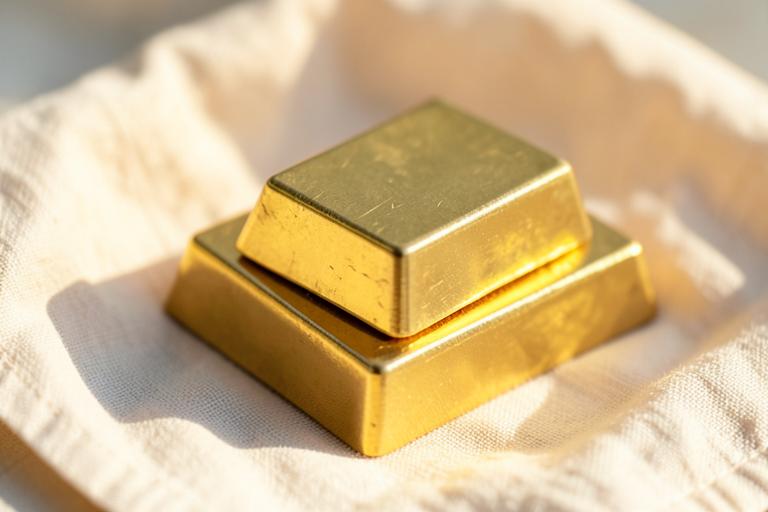
- Gold bars and coins: Pieces of standard weight, usually 24K (purity of about 99.9%), sold at the pure-gold gram price plus a small premium. In practice the gold pound belongs in this group too, although it is 21K (see the gold pound guide).
- Gold jewelry: Rings, bracelets, necklaces and sets, usually in 21K or 18K, sold at the gram price plus a making charge that depends on the complexity of the design.
For the pure-gram price, see the 24K gold price in Egypt.
The difference in cost: a worked example
The following figures are round illustrative examples, not today's price. Suppose a gram of 21K costs 4,000 Egyptian pounds, so a gram of 24K is about 4,571 pounds (4,000 × 24 ÷ 21).
Jewelry
You buy 50 grams of 21K with an assumed making charge of 250 pounds per gram:
| Item | Calculation | Amount |
|---|---|---|
| Gold value | 50 × 4,000 | 200,000 pounds |
| Making charge | 50 × 250 | 12,500 pounds |
| Total you pay | 212,500 pounds | |
| What you might get on resale at the same price (by weight only) | 50 × 4,000 | 200,000 pounds |
| Difference | about 12,500 pounds (roughly 5.9%) |
Bar
You buy a 10-gram 24K bar, with an assumed 2% premium on purchase and an assumed 0.5% discount when selling to a dealer:
| Item | Calculation | Amount |
|---|---|---|
| Gold value | 10 × 4,571 | about 45,710 pounds |
| 2% premium | about 914 pounds | |
| Total you pay | about 46,624 pounds | |
| What you get on resale (gold value − 0.5%) | about 45,481 pounds | |
| Difference | about 1,143 pounds (roughly 2.5%) |
This comparison remains an example only; premiums and discounts vary by dealer, weight and time. The key point is that the buy-sell gap on bars is often smaller, because you are not paying for a design. You can try your own numbers in the gold calculator.
Comparison table
| Point of comparison | Bars and coins (24K) | Jewelry (21K and 18K) |
|---|---|---|
| Purity | Very high (about 99.9%) | 87.5% for 21K, 75% for 18K |
| Making charge | Relatively small premium | Higher making charge depending on design, often lost at resale |
| Buy-sell spread | Often smaller | Often larger because of the making charge |
| Ease of pricing | High (known weight and purity) | Needs weighing and karat testing |
| Stones and extras | None | May be present, and often not valued at resale |
| Storage | Needs a safe place and perhaps a certificate and packaging | Needs a safe place, but can be used and worn |
| Liquidity | Good with dealers and jewelers | Good but often with the making charge deducted |
| Use and sentimental value | Mostly purely for saving | Adornment, gifts and occasions with sentimental value |
| Taxes | May be treated specially in some countries | The making charge may be taxed in some countries |
Other factors you should know about
Purity and karat
24K is the purest, but it is softer, which is why jewelry is usually made in 21K or 18K to withstand wear. The lower the karat, the less pure gold per gram: a gram of 18K contains a quarter less pure gold than a gram of 24K. Do not compare prices between karats before converting to pure gold.
Storage and security
Pure gold is valuable relative to its size, so it needs a safe place at home or a bank safe-deposit box. Jewelry worn every day is more exposed to loss or damage than stored bars. Bars should be kept in their original packaging with the invoice, if there is one.
Taxes
The tax treatment of gold differs from country to country. Some countries treat high-purity investment gold differently from jewelry, and value-added tax or other taxes may be charged on making charges. It is not possible to generalize here, so check local rules or ask the dealer or a qualified adviser.
Sentimental value and use
Jewelry gives you a benefit bars do not: wearing it, giving it on occasions and the emotional attachment. Many people buy it for these reasons and treat saving as a side benefit. This is real value, but it does not show up in the resale price.
Questions to help you decide what suits you
- Do I want to use the gold or just save it?
- How large is the amount, and does it fit the bar weights available?
- Do I have a safe place to store it?
- Do I expect to need to sell a small part suddenly? In that case small pieces such as the gold pound or its quarter help.
- Do I know the tax rules in my country?
Practical tips
- Compare more than one dealer on making charge, premium and buying and selling prices.
- Ask for an invoice stating weight and karat, and keep it.
- Exclude stones when calculating the gold value of jewelry.
- Estimate the value before buying using the gold calculator.
- Remember that prices are indicative and change throughout the day, and that this article does not recommend buying.
Two cases to illustrate
- A saver who sets aside a small amount every month: Small units such as the quarter pound or bars of a few grams may suit them, because they allow gradual buying and selling a small part when needed.
- A family preparing a wedding gift: They may prefer jewelry for its sentimental and practical value, knowing that part of the making charge will not come back at resale.
These two cases are not advice to buy; they are examples showing how the goal changes the comparison between the two options.
Summary
If your goal is saving only, bars and coins tend to carry a lower making charge and a smaller buy-sell gap. If you want to wear and gift, jewelry is suitable, as long as you accept that the making charge is often not recovered. The decision is personal and depends on your goal, your budget, where you can store it and the tax rules in your country.
Frequently asked questions
Do I lose the making charge when I sell gold jewelry?
Usually yes. Used gold is normally valued by its weight and karat, while the making charge you paid for the design is not recovered in most cases. Details vary from one dealer to another.
Why do bars usually have a lower making cost?
Because they are simple standard pieces with no design, so the cost above the gold price is limited to a relatively small premium covering casting, packaging and distribution.
Is tax charged on buying bars?
Tax treatment differs from country to country; some countries treat high-purity investment gold differently from jewelry, and taxes may be charged on making charges. Check local rules or ask the dealer or a qualified adviser.
Which is easier to sell, bars or jewelry?
Both sell easily to dealers, but bars and coins are priced quickly because their purity and weight are known, while jewelry usually needs weighing, karat testing and a making-charge deduction.